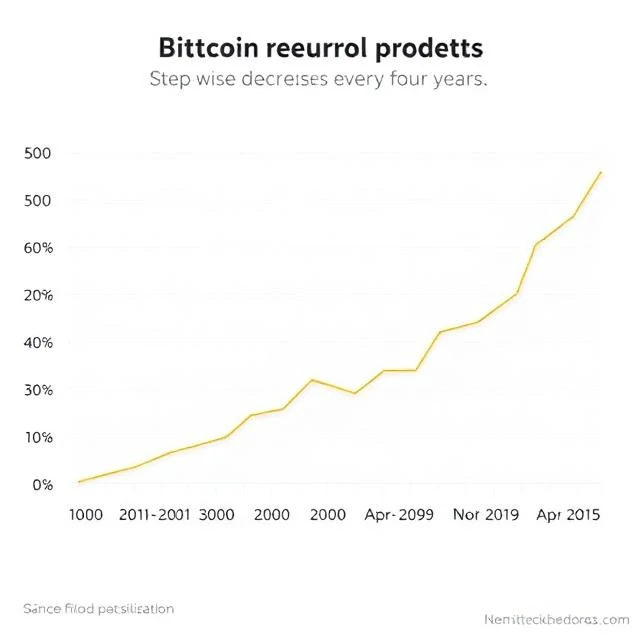
Every four years, Bitcoin cuts the reward miners receive for finding a block in half. That event is called the halving. It is written into the protocol. No vote, no committee, no discretion. In 2009, miners earned 50 BTC per block. In 2012, it dropped to 25. In 2016, 12.5. In 2020, 6.25. The next halving will bring it to 3.125. The process continues until the block reward reaches zero, around the year 2140. At that point, miners will earn only transaction fees.
The halving reduces the rate at which new Bitcoin enters circulation. The supply is capped at 21 million, and the halving is how the protocol enforces that cap. The event is watched closely because it changes the economics of mining. Miners with higher costs get squeezed out. The remaining miners need Bitcoin's price to stay high enough to cover their electricity bills. Historically, halvings have preceded major price increases. That pattern is not guaranteed. Past performance does not predict future results. What is certain is that the halving will happen on schedule. The code does not care about market sentiment.
Halving schedule
- 2009 — 50 BTC per block
- 2012 — 25 BTC
- 2016 — 12.5 BTC
- 2020 — 6.25 BTC
- 2024 — 3.125 BTC
Each halving cuts new supply in half. Whether that matters for price depends on demand.
Comments
No comments yet. Be the first to share a thought.
Leave a comment