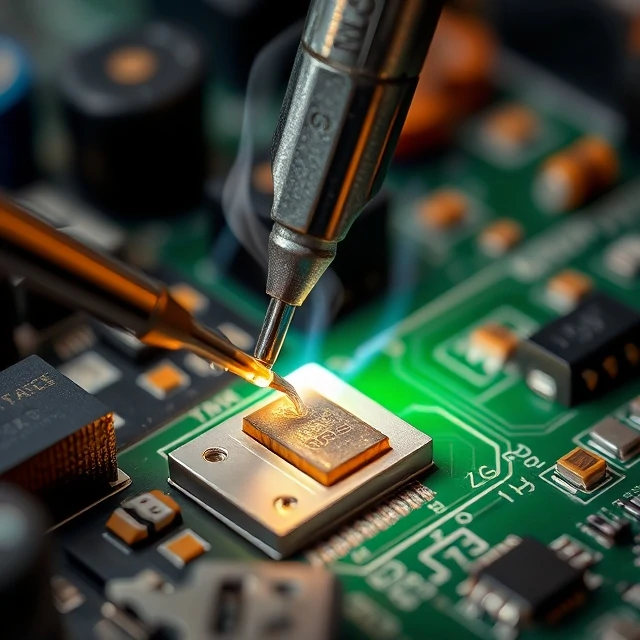
Soldering joins metal parts with a filler alloy that melts at a lower temperature than the parts themselves. The filler is called solder. It flows into the gap between the parts, cools, and hardens, forming both an electrical and a mechanical connection. Electronics soldering uses a tin-lead or lead-free alloy that melts around 180–190°C. Jewelry soldering uses silver or gold solder that melts at higher temperatures, sometimes with a torch instead of an iron.
The key is heat transfer. The iron tip must touch both the pad and the component lead at the same time. Feed solder into the heated joint, not onto the iron. A good solder joint is shiny and concave, like a tiny volcano. A cold joint looks dull and blobby. It may work at first, then fail later. Flux cleans the metal and helps solder flow. Rosin flux is common in electronics. It leaves a sticky residue that should be cleaned off.
Basic soldering tools
- Soldering iron with adjustable temperature
- Solder wire, rosin-core or lead-free
- Flux pen or paste
- Brass wool or a damp sponge for tip cleaning
- Helping hands or a third-hand tool to hold the work
Tin the tip before and after every session. A black, oxidized tip transfers almost no heat and makes every joint a struggle.
Comments
No comments yet. Be the first to share a thought.
Leave a comment