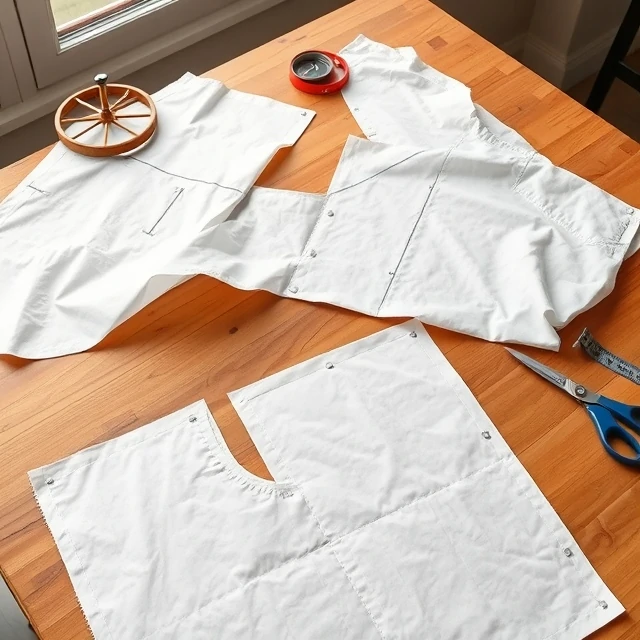
A pattern is a guide that tells you what shape to cut, where to fold, or how to assemble a project. In sewing, patterns are printed on tissue paper or drafted on brown paper, with markings for grainline, notches, and seam allowances. In knitting and crochet, a pattern is written instructions with stitch counts and row repeats. In woodworking, a pattern might be a full-size drawing traced onto a board.
Commercial sewing patterns come in envelopes with multiple sizes printed on overlapping lines. You trace the size you need onto fresh paper so the original stays intact. Digital patterns are PDFs you print at home and tape together. Either way, the pattern is a starting point. Fit adjustments are normal. Shoulders, bust, and waist rarely match a standard size chart without tweaking.
Pattern markings worth knowing
- Grainline — shows how the pattern lines up with the fabric's weave
- Notches — small marks that match front to back pieces
- Darts — folded tucks that shape fabric to the body
- Seam allowance — the margin between the stitching line and the cut edge
Store patterns flat or rolled, not folded. Creases distort the lines and make cutting less accurate.
Comments (2)
Leave a comment