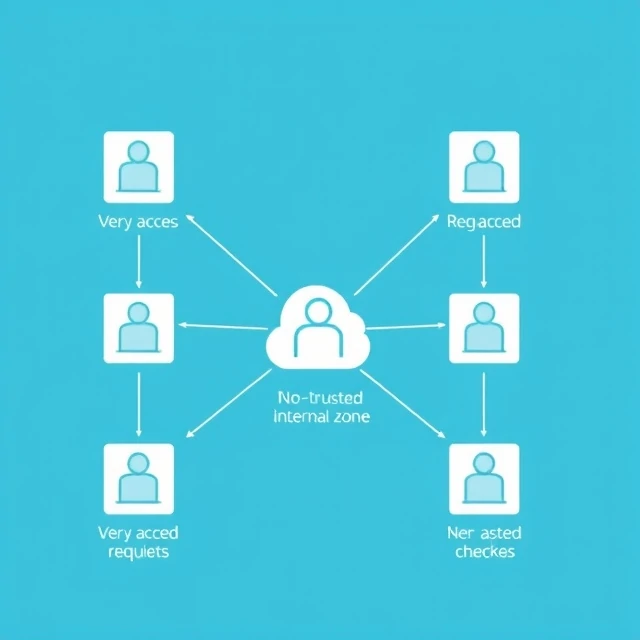
Zero trust assumes no user or device is trustworthy by default. Every access request is verified. Identity, device health, location, and behavior all factor into the decision. The old model trusted everything inside the network perimeter. Once you were in, you had access. Zero trust removes the perimeter. There is no inside and outside. There is only verified and unverified.
The model emerged because the perimeter dissolved. Remote work, cloud services, and personal devices made the network boundary meaningless. Employees access company data from home, airports, and coffee shops. Contractors connect from their own laptops. The firewall that once protected everything now protects almost nothing. Zero trust replaces the perimeter with identity. Every request is authenticated, authorized, and encrypted. Microsegmentation limits lateral movement. Least privilege limits what any account can do. Continuous monitoring catches anomalies. The 2020 SolarWinds breach demonstrated the problem. Attackers used legitimate credentials and trusted software updates to move through networks that assumed internal trust. Zero trust would not have stopped the initial compromise. It could have limited the spread. Implementation is gradual. Most organizations start with identity and move toward microsegmentation. Full zero trust is a journey, not a purchase.
Zero trust principles
- Verify explicitly — authenticate and authorize every request
- Least privilege — grant minimum necessary access
- Assume breach — design as if attackers are already inside
- Microsegmentation — limit lateral movement
- Continuous monitoring — detect anomalies in real time
Zero trust is not a product. It is an architecture. The tools matter less than the mindset.
Comments
No comments yet. Be the first to share a thought.
Leave a comment