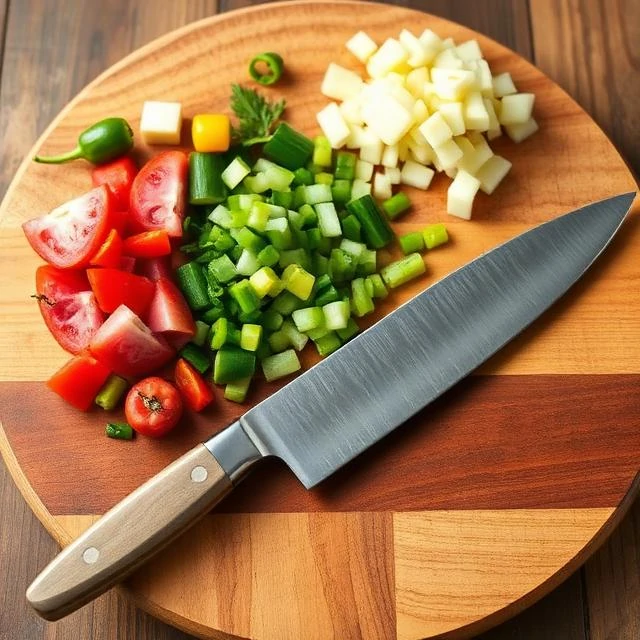
A cutting board is a durable surface used for chopping and preparing ingredients. It is one of the most basic tools in the kitchen. It protects the counter from the knife. It protects the knife from the counter. It provides a stable surface for cutting. It is the stage for the prep work. The cook stands at the board. The knife moves on the board. The ingredients are transformed. The board is the foundation. The board is the beginning. The board is the cutting board.
Cutting boards come in several types. Wood boards are traditional and gentle on knives. They are made of maple, walnut, or bamboo. They require oiling and hand washing. Plastic boards are cheap, lightweight, and dishwasher-safe. They are easy to sanitize. They can harbor bacteria in deep cuts. Composite boards are made of resin and wood fiber. They are durable and dishwasher-safe. Glass boards are non-porous and easy to clean. They are hard on knives. Each has its own advantages and disadvantages. The choice depends on the cook and the task. A wood board for vegetables. A plastic board for meat. A separate board for each. Cross-contamination is a risk. The board is the vector. The cook must be careful.
Cutting boards must be maintained. Wood boards must be oiled regularly to prevent cracking. They must be washed with hot, soapy water and dried immediately. They must not be soaked. Plastic boards must be washed in the dishwasher or with hot, soapy water. They must be replaced when they are deeply scored. A worn board harbors bacteria. A clean board is a safe board. The board is a simple tool. It is also a critical one. It is the surface where the meal begins. It is the surface where the cook works. It is the surface that must be clean. The board is the kitchen's workbench. The board is the cook's desk. The board is the cutting board.
Comments
No comments yet. Be the first to share a thought.
Leave a comment