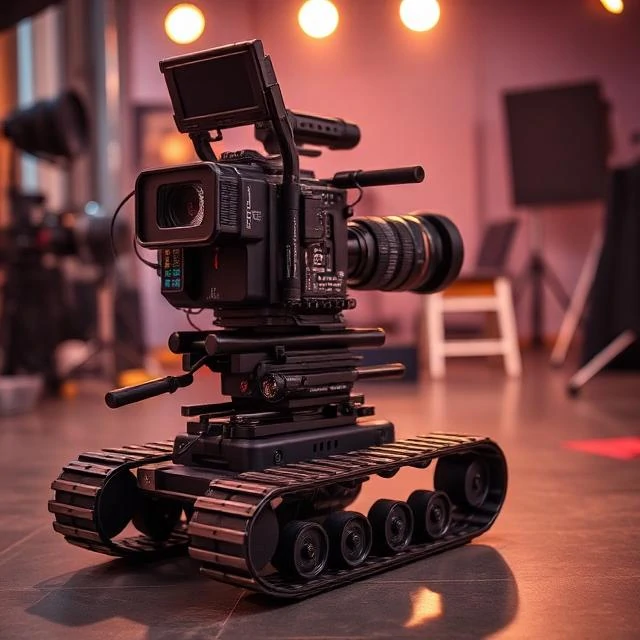
A dolly is a wheeled platform used to move a camera smoothly during a shot. The camera is mounted on the dolly, and the dolly is pushed or pulled along a track. The result is a smooth, controlled movement that a handheld camera cannot achieve. The dolly shot is one of the most common camera moves in cinema. It can follow a character, reveal a space, or create a sense of momentum.
The dolly has several variations. A standard dolly moves forward or backward, toward or away from the subject. A tracking shot moves sideways, following a subject. A crab dolly can move in any direction, including diagonally. A doorway dolly is small enough to fit through a door. A Western dolly has large pneumatic tires for rough terrain. Each type is designed for a specific situation.
The dolly shot is not just about movement. It is about point of view. A dolly in can create intimacy or tension, bringing the audience closer to a character. A dolly out can create isolation or revelation, pulling back to show the context. A tracking shot can create a sense of journey or pursuit. The speed and direction of the dolly shape the emotional effect.
The dolly requires a crew. A dolly grip pushes the dolly. A camera operator controls the camera. A focus puller adjusts the focus. A director watches the shot. The coordination is precise. When it works, the movement is invisible. The audience just feels the flow.
Comments
No comments yet. Be the first to share a thought.
Leave a comment