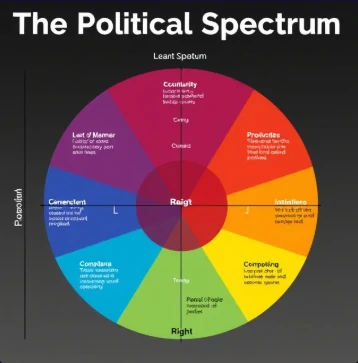
Political positions are often arranged along a spectrum from left to right. The left typically emphasizes equality and reform; the right emphasizes tradition, order, and established hierarchies. The spectrum is a simplifying map, not a complete description of political space.
Additional dimensions—authoritarian versus libertarian, globalist versus nationalist—cut across the left-right axis and produce a more accurate landscape. Individuals and parties occupy regions rather than single points, and their locations shift over time. Extreme ends of the spectrum have been associated with revolutionary and reactionary movements that reject liberal democratic norms.
Voters use spectrum cues as shortcuts when detailed policy information is costly. Media and education systems reinforce or challenge particular placements of issues. Understanding the spectrum helps explain coalition possibilities and the rhetoric of political conflict, even while acknowledging its limitations.
- Range of positions from left to right
- Left associated with equality and change
- Right associated with tradition and order
- Oversimplifies but remains a useful heuristic
Comments
No comments yet. Be the first to share a thought.
Leave a comment