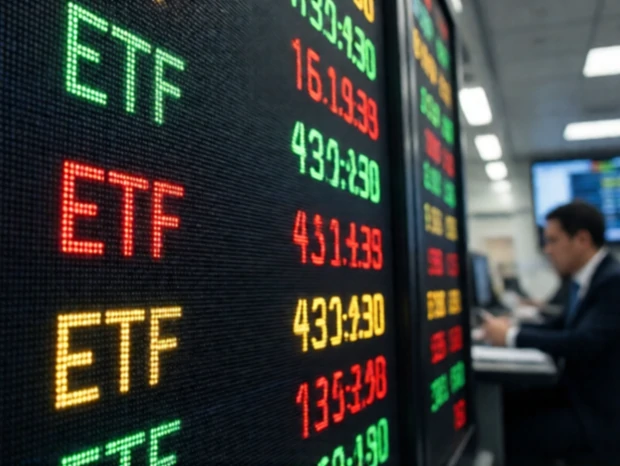
An exchange-traded fund, or ETF, is a basket of securities that trades on a stock exchange like a single stock. It might track an index, a sector, a commodity, or a theme. The S&P 500 ETF holds the stocks in that index. A gold ETF holds gold. A bond ETF holds bonds. The fund is bought and sold throughout the trading day at market prices.
ETFs combine features of mutual funds and stocks. Like mutual funds, they offer diversification in one purchase. Like stocks, they trade in real time. They typically have low expense ratios, often under 0.2 percent. They are tax-efficient because they rarely distribute capital gains. These features have made them enormously popular. Global ETF assets exceed $10 trillion.
Not all ETFs are equal. Some are plain index trackers. Others use leverage or inverse strategies, which are complex and risky. Some have low trading volume, making them hard to buy or sell at a fair price. Expense ratios vary. So do the underlying holdings. Reading the prospectus matters. An ETF is a tool. Like any tool, it works well when used correctly and badly when misunderstood. The simplicity of the wrapper hides the variety inside.
Common types
- Index ETFs
- Sector and industry ETFs
- Bond ETFs
- Commodity ETFs
- Leveraged and inverse ETFs
Comments
No comments yet. Be the first to share a thought.
Leave a comment