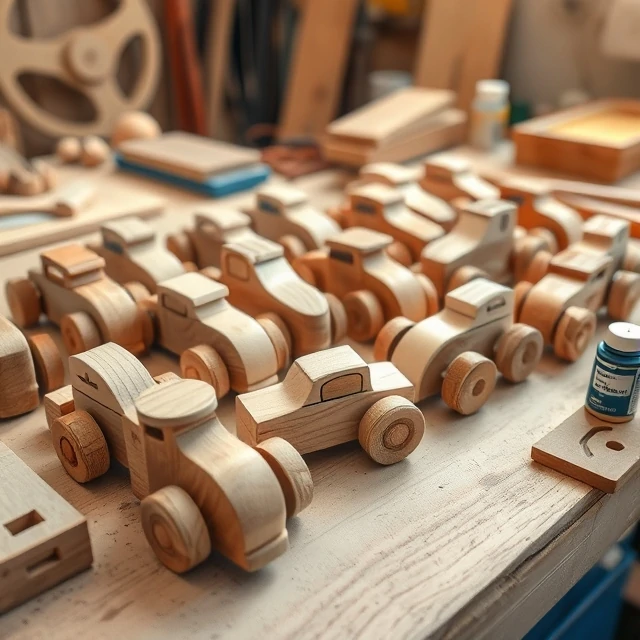
Toy making builds playthings by hand or in small batches. Wooden cars, stuffed animals, cloth dolls, puzzles, and simple mechanical toys are all part of the craft. The materials vary: hardwood, softwood, cotton, wool felt, non-toxic paint, and natural finishes. Safety drives many decisions. Small parts must be secured so they cannot come loose. Paints and finishes must be safe if a child chews on them. Edges get rounded and sanded smooth.
Handmade toys have a different feel from mass-produced plastic. They show the maker's hand: the grain of the wood, the stitches on a stuffed bear, the slight asymmetry of a carved animal. Wooden toys often use food-safe oil or beeswax instead of varnish. Cloth toys use strong seams and embroidered features instead of buttons that can pull off. The craft rewards patience. A toy that lasts through years of play is a small piece of craftsmanship that keeps giving.
Popular handmade toys
- Wooden cars and trucks — sanded, oiled, and ready to roll
- Stuffed animals — sewn from cotton or wool felt, stuffed with polyfill or wool
- Puzzles — cut from plywood or hardwood, painted or left natural
- Cloth dolls — simple shapes with embroidered faces
- Pull toys — a wooden figure on wheels with a string
Test every toy before giving it to a child. Tug on the wheels, the eyes, the seams. If it moves when it should not, fix it or start over.
Comments
No comments yet. Be the first to share a thought.
Leave a comment