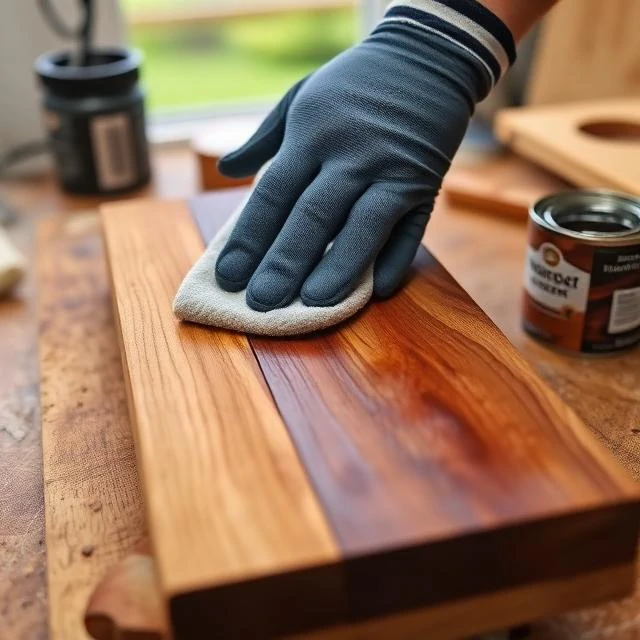
Stain colors wood while letting the grain show through. It is not paint. Paint sits on the surface and hides the wood. Stain soaks into the fibers and changes their color from within. That is why a stained oak table still looks like oak, while a painted one looks like paint. Stain comes in oil-based, water-based, and gel formulas. Oil-based stains penetrate deeply and give warm, rich tones. Water-based stains dry faster and have less odor. Gel stains sit on the surface longer and are easier to control on vertical surfaces.
Preparation decides the result. Sand the wood through the grits, raise the grain with a damp cloth, sand lightly again, and remove all dust. Blotches appear when stain absorbs unevenly. A pre-stain conditioner helps soft woods like pine and maple take stain evenly. After staining, wipe off the excess before it dries. A second coat darkens the color. Finish with a clear topcoat of varnish, polyurethane, or oil to protect the color.
Stain types at a glance
- Oil-based — deep color, slow dry, strong odor
- Water-based — fast dry, low odor, raises grain
- Gel — thick, easy control, less penetration
- Dye — transparent, vivid, fades in strong sunlight
Test on scrap first. The same stain looks different on oak, pine, and cherry. Always test.
Comments
No comments yet. Be the first to share a thought.
Leave a comment