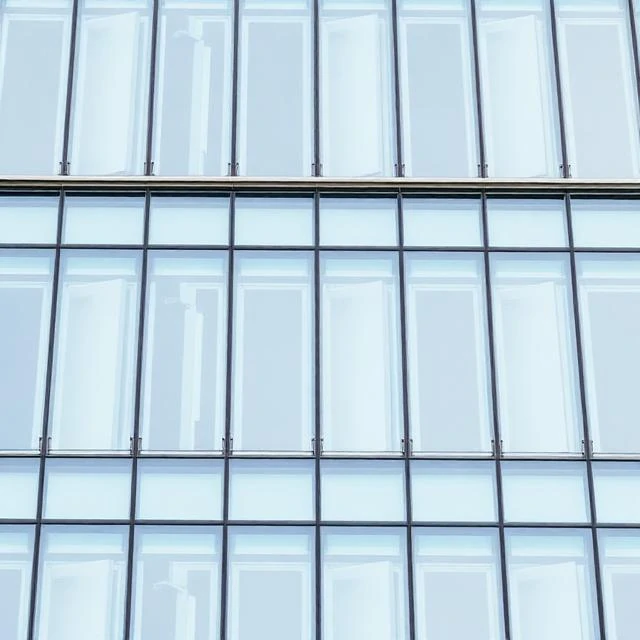
A glass curtain wall is a non-structural outer wall that hangs off a building's frame. It does not carry the weight of the floors or roof. Instead, it is a skin that keeps weather out and lets light in. The name comes from the idea that the wall hangs like a curtain.
Curtain walls are made of glass panels set in aluminum or steel frames. The frames are connected to the building's structural frame with brackets that allow for movement. Sealants and gaskets keep water and air out. Insulated glass units improve thermal performance.
Curtain walls changed architecture. They made it possible to build tall buildings with almost transparent facades. But they also created problems: heat gain, glare, and energy loss. Modern curtain walls use low-emissivity coatings, double or triple glazing, and shading devices to improve performance.
Fire safety is a major concern. Curtain walls must not spread fire between floors. Fire stops and sprinklers are required. After several high-profile facade fires, regulations have tightened.
Comments
No comments yet. Be the first to share a thought.
Leave a comment