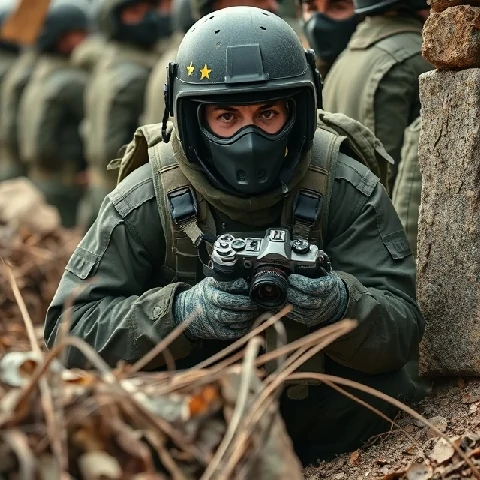
Photojournalism tells news stories through photographs. It is a form of journalism, and it follows the same ethical standards: accuracy, fairness, and independence. A photojournalist goes to where the news is happening, documents it, and delivers images that inform the public. The work is often difficult and sometimes dangerous. Photojournalists have been killed, injured, and imprisoned for doing their jobs. The tradition includes Robert Capa, who landed with the troops on D-Day, and Eddie Adams, whose photograph of a street execution in Saigon changed public opinion about the Vietnam War.
Photojournalism is not just about spot news. It includes features, portraits, and long-form projects. It is published in newspapers, magazines, and online. The digital age has changed the industry. Wire services distribute images instantly. Social media has made everyone a potential photojournalist. But the core values remain the same. A photojournalist does not stage the scene. They do not manipulate the image beyond basic corrections. They do not pay subjects for stories. They seek the truth and try to show it fairly. The best photojournalism is both factual and moving. It tells you what happened and makes you care.
Photojournalism ethics
- Accuracy. Do not stage or manipulate scenes.
- Fairness. Show multiple sides when possible.
- Independence. Do not accept payment from subjects.
- Minimal editing. Do not alter the content of the image.
- Humanity. Treat subjects with respect and dignity.
Photojournalism is not the same as documentary photography, though the two overlap. Photojournalism is tied to news. Documentary photography can take a longer view.
Comments
No comments yet. Be the first to share a thought.
Leave a comment