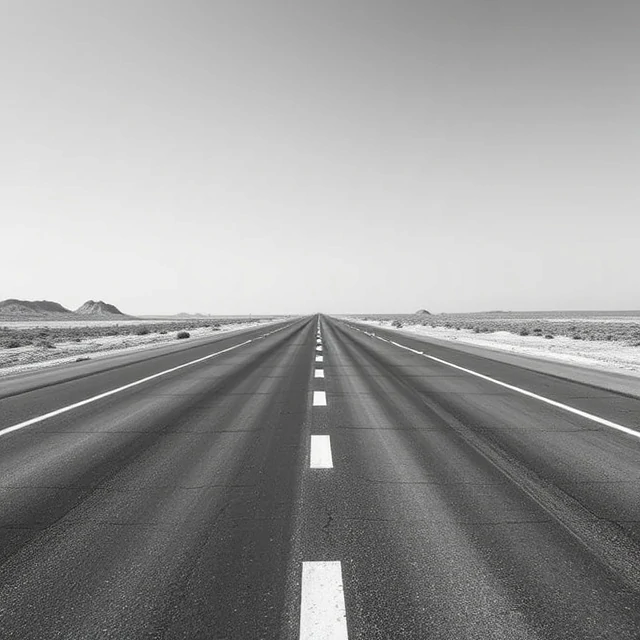
Perspective is the relationship between objects in an image as seen by the camera. It determines how large objects appear relative to each other, how lines converge, and how depth is rendered. Perspective is not the same as focal length, though the two are often confused. Focal length determines how much of the scene is included. Perspective determines how the scene looks. Changing focal length and moving to keep the subject the same size changes perspective. A wide lens close to the subject exaggerates depth, making near objects look larger. A telephoto lens far from the subject compresses depth, making distant objects look closer together.
Perspective is a powerful compositional tool. A low angle makes a subject look powerful. A high angle makes it look small. A straight-on angle feels neutral. Linear perspective, with lines converging toward a vanishing point, creates a sense of depth. Atmospheric perspective, where distant objects appear hazier and bluer, also creates depth. Understanding perspective helps you choose the right lens and the right position for the shot. It is not about the lens alone. It is about where you stand and how the scene is arranged.
Types of perspective
- Linear. Lines converging toward a vanishing point.
- Atmospheric. Distant objects appear hazier and bluer.
- Forced. Using distance to make objects appear larger or smaller.
- Compressed. Telephoto lenses make distant objects look closer.
Perspective is not the same as point of view. Point of view is where you stand. Perspective is how the scene looks from that position.
Comments
No comments yet. Be the first to share a thought.
Leave a comment