The study of the ocean’s physical properties and the processes that govern its motion is physical oceanography. It encompasses currents, waves, tides, turbulence, the distribution of temperature and salinity, and the exchange of heat and momentum with the atmosphere.
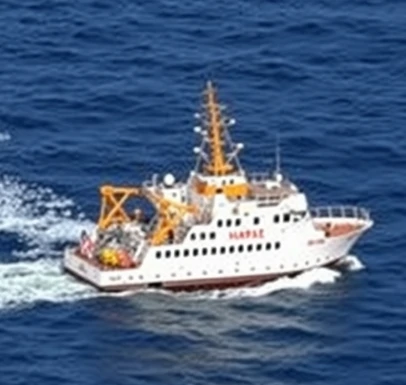
Physical oceanographers use a mix of theory, observations, and numerical models. Observations come from satellites, Argo floats, moorings, research ships, and coastal radars. The goals include understanding what sets the ocean’s circulation, how heat is transported poleward, how mixing occurs across density surfaces, and how the ocean will respond to a changing climate.
Findings from physical oceanography underpin weather and climate prediction, search-and-rescue operations, and the design of offshore structures. The discipline has close ties to atmospheric science, because the ocean and atmosphere form a coupled system. Advances in computing and autonomous observing have accelerated progress, yet fundamental questions about mixing, small-scale processes, and long-term predictability remain active research topics.
A well-resolved picture of the physical ocean is the foundation on which chemical and biological understanding is built.
Comments
No comments yet. Be the first to share a thought.
Leave a comment