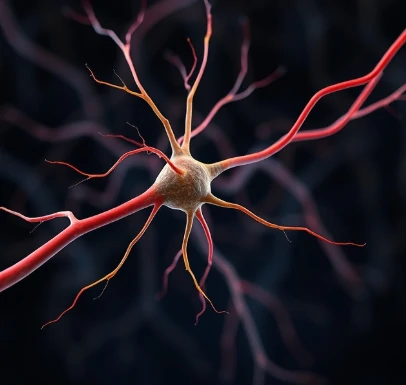
The final common path from the nervous system to skeletal muscle is the motor neuron. Its cell body lies in the spinal cord or brainstem; its axon exits via a ventral root or cranial nerve and synapses onto muscle fibers at the neuromuscular junction.
A single motor neuron and the muscle fibers it innervates constitute a motor unit. Small motor units allow fine control; large ones generate greater force. Motor neurons integrate inputs from sensory afferents, interneurons, and descending pathways before deciding whether to fire. Their firing rate and recruitment order determine the force and timing of muscle contraction.
Degeneration of motor neurons produces the progressive weakness of amyotrophic lateral sclerosis and related diseases. Toxins and autoimmune attacks at the neuromuscular junction also impair motor output. Because motor neurons are large and accessible, they have been model cells for studying excitability, synaptic transmission, and disease mechanisms.
Every voluntary movement ultimately depends on the reliable firing of these cells.
Comments
No comments yet. Be the first to share a thought.
Leave a comment