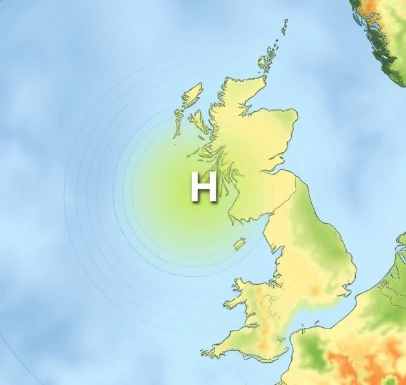
In a high-pressure system, air descends and spreads outward at the surface. The sinking motion suppresses cloud formation, so these systems typically bring clear skies and light winds near the center.
Surface winds spiral outward in a clockwise direction in the Northern Hemisphere. Pressure is highest at the center and decreases toward the edges. The air is usually stable, which limits vertical motion and precipitation.
Persistent high-pressure systems can produce heat waves in summer or cold, frosty nights in winter. They often act as blocking patterns that divert storm tracks around them. On weather maps they are marked with an H and surrounding isobars.
- Descending air and clear skies
- Outward spiraling surface winds
- Associated with fair weather
- Can stall and block other systems
Comments
No comments yet. Be the first to share a thought.
Leave a comment