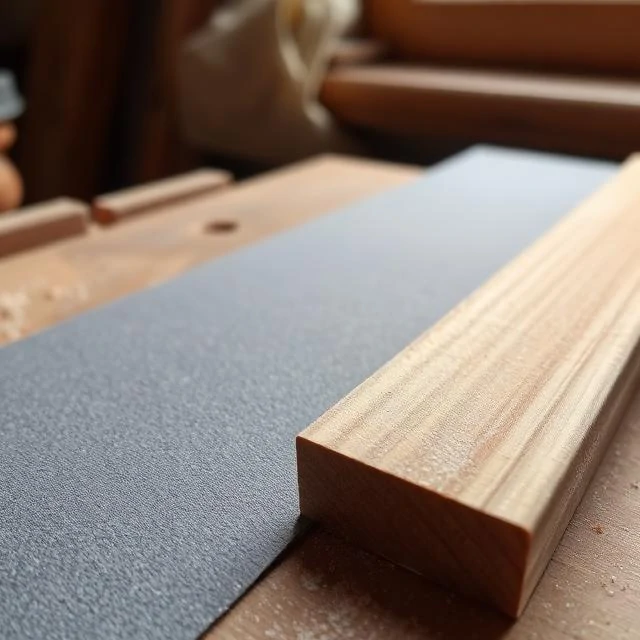
Sandpaper is an abrasive paper used to smooth wood, metal, plastic, and painted surfaces. The abrasive grains are glued to a backing. Sandpaper grit numbers tell you how coarse or fine it is. Lower numbers cut fast and leave scratches. Higher numbers polish and leave a smooth surface. A 60-grit belt removes stock quickly. A 400-grit sheet prepares a surface for finish.
The backing matters too. Paper backing is fine for hand sanding. Cloth backing lasts longer and is used on belts and discs. Film backing gives a very flat, consistent scratch. Sandpaper clogs when the abrasive fills with dust. That is called loading. Stearated sandpaper resists loading and lasts longer on painted surfaces. Cleaning the paper with a crepe rubber block or a brush helps it cut longer.
Typical grit progression
- 80 grit — rough shaping and paint removal
- 120 grit — removing scratches from 80
- 180 grit — general smoothing before finish
- 220 grit — final sanding before stain or varnish
- 400+ grit — between coats and final polishing
Do not skip more than one grit step. Jumping from 80 to 220 leaves deep scratches that show up the moment stain hits the wood. Sand with the grain. Cross-grain scratches are almost impossible to hide.
Comments (3)
Leave a comment