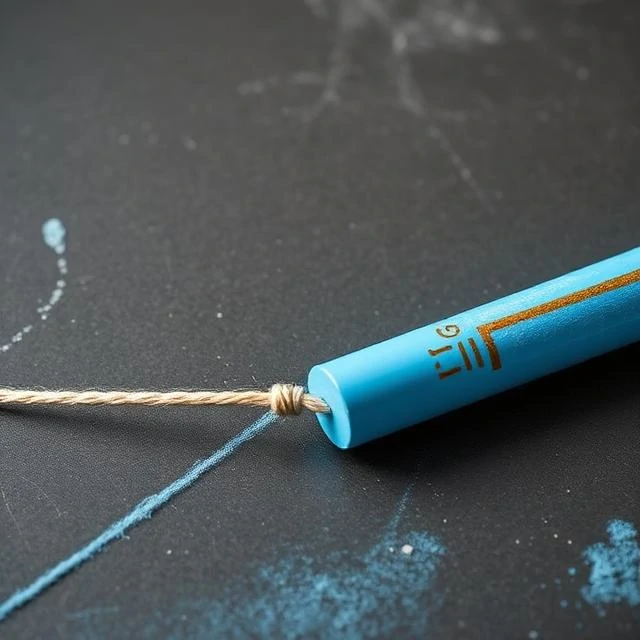
A chalk line is a simple tool that snaps a straight line onto a surface. It is a string coated with chalk, wound inside a case. The user pulls the string out, stretches it tight between two points, and snaps it against the surface. The chalk transfers to the surface, leaving a straight, visible line. It is used to mark cuts, layout, and alignment. It is one of the oldest and most useful tools in construction.
Chalk lines come in several types. A standard chalk line holds 50 to 100 feet of string. The case has a rewind mechanism and a chalk reservoir. The line can be refilled with chalk in different colors. Blue is common. Red is used for concrete and masonry. Fluorescent colors are used for visibility. A chalk box can also be used as a plumb bob, a level, and a straightedge. It is a versatile tool.
Chalk lines are used in framing, drywall, roofing, flooring, and masonry. A framer snaps lines on a subfloor to mark wall locations. A roofer snaps lines to align shingles. A tile setter snaps lines to lay out a grid. A mason snaps lines on a wall to keep courses level. The line is temporary. It disappears under the finished work. But it guides the work that covers it. The chalk line is a small tool with a big job: keeping construction straight.
Comments (3)
Leave a comment