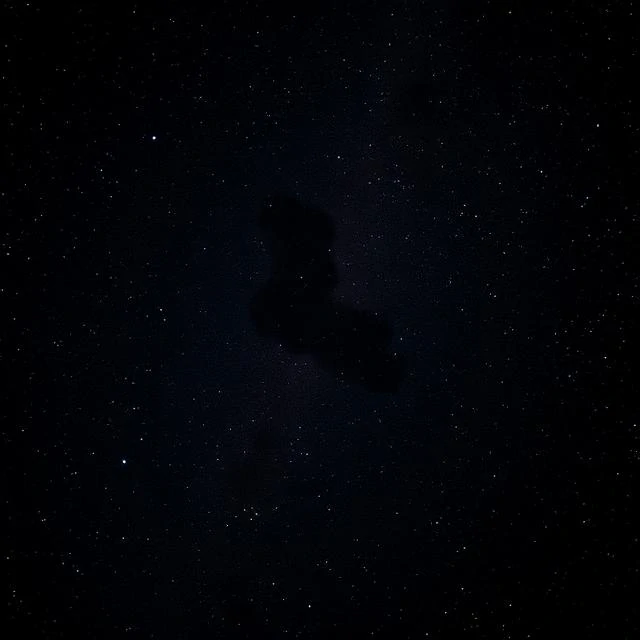
The space between stars is not empty. It contains gas, dust, cosmic rays, and magnetic fields. This material is the interstellar medium, and it is the raw material from which new stars and planets form. It is also the graveyard of old stars, enriched with heavy elements that were forged in their cores and released when they died.
The medium is thin by Earth standards. A cubic centimeter might contain a few atoms, compared to billions of billions in the air we breathe. But the distances are vast, so the total mass is enormous. The Milky Way contains about 10 percent of its mass in interstellar gas and dust.
The medium is not uniform. It has phases. There are cold, dense molecular clouds where stars form. There are warm, neutral regions. There is hot, ionized gas around young stars and supernova remnants. These phases interact, and the balance between them shapes how galaxies evolve.
Dust is a minor component by mass but a major one for astronomers. It blocks visible light, creating dark nebulae. It also reddens starlight, the same way smoke reddens a sunset. Infrared telescopes can see through the dust, revealing the stars and clouds behind it.
Comments
No comments yet. Be the first to share a thought.
Leave a comment