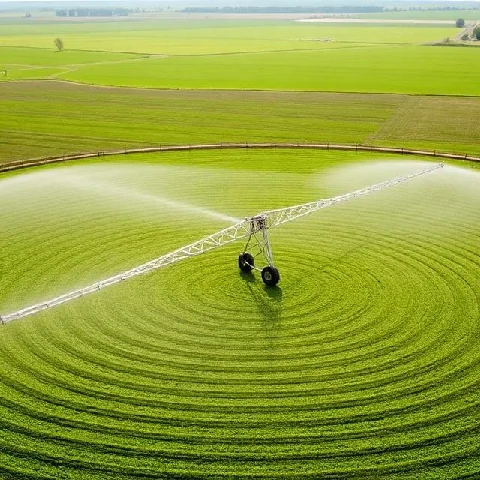
Some fields cannot flood. Slopes, sandy soils, and crops sensitive to standing water rule out surface methods. Sprinkler irrigation solves the problem by applying water as a spray, letting it soak in where it lands.
The method works for almost any crop. Vegetables, orchards, pastures, and cereals all respond well. It also allows precise scheduling, applying water when the crop needs it rather than when the field can be flooded.
Advantages and drawbacks
- Adapts to uneven terrain
- Allows light, frequent applications
- Can wash off some pesticides and fertilizers
- Loses water to wind and evaporation
- Requires energy for pumping
Efficiency depends on management. Running sprinklers at midday in wind wastes water. Night irrigation reduces losses but can encourage disease in humid climates.
Comments (2)
Leave a comment