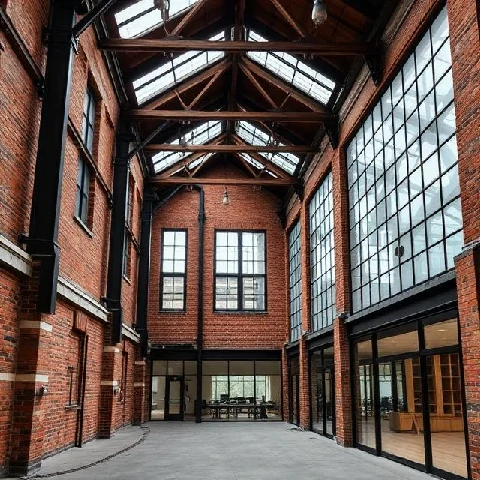
A 19th-century textile mill becomes apartments. A power plant turns into an art museum. A church is reborn as a bookstore. Adaptive reuse is the practice of giving an existing building a new purpose while keeping its bones — the structure, the facade, the character that made it worth saving.
The appeal goes beyond nostalgia. Demolition generates enormous waste, and new construction consumes raw materials and energy. Reusing a building's frame and shell often cuts the carbon footprint dramatically. It also preserves the texture of a neighborhood: the brick warehouse that becomes a brewery still tells you what the street used to be.
But it is rarely simple. Old buildings have quirks — low floor-to-floor heights, hazardous materials, structural systems that were never meant to carry modern loads. Architects spend months measuring, testing, and negotiating with code officials. The best projects make those constraints visible rather than hiding them.
What separates good adaptive reuse from a generic renovation? Respect. The new function should fit the old form, not fight it.
Comments
No comments yet. Be the first to share a thought.
Leave a comment