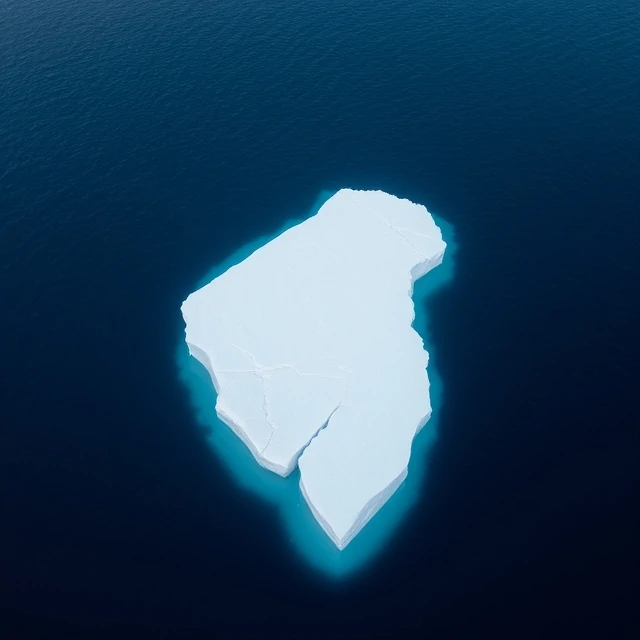
Only a fraction of the ice shows above water. An iceberg is a large piece of freshwater ice that has broken off a glacier or ice shelf and floats freely in the ocean. The visible tip is typically one-eighth to one-tenth of the total volume.
Most icebergs originate from the Greenland and Antarctic ice sheets. Ocean currents carry them into shipping lanes, where they pose hazards. The sinking of the Titanic after striking an iceberg remains the most famous example. Satellite monitoring and international ice patrols now track large bergs.
As icebergs melt they release freshwater and can affect local ocean circulation. Their shapes range from tabular giants to sculpted pinnacles. The blue color of dense glacial ice appears when air bubbles have been compressed out of the ice over centuries.
- Floating mass of ice from a glacier or ice shelf
- Most of its volume lies underwater
- Hazard to navigation
- Primarily from Greenland and Antarctica
Comments (2)
Leave a comment