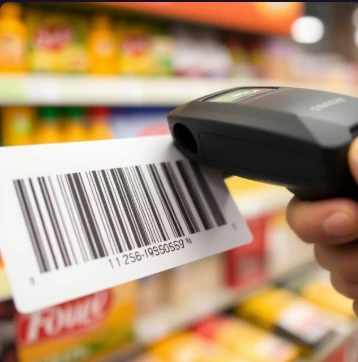
A cashier waves a cereal box across a small glass window and the price appears instantly. The pattern of black lines on the package is a barcode. It encodes product information that scanners read in a fraction of a second.
Most retail barcodes follow the UPC or EAN standards and identify the manufacturer and specific item. When scanned they pull price, description, and inventory data from the store’s system. Barcodes eliminated most manual price entry and dramatically sped up checkout. They also enable precise tracking of what sells and when.
Printing quality matters; damaged or poorly printed codes slow the line. Newer two-dimensional codes can hold more data, yet the linear barcode remains dominant at the point of sale. For retailers the barcode turned every package into a machine-readable record.
- Machine-readable code identifying a product
- Enables rapid price lookup and inventory tracking
- Standardized as UPC or EAN in most markets
- Foundation of modern checkout systems
Comments
No comments yet. Be the first to share a thought.
Leave a comment