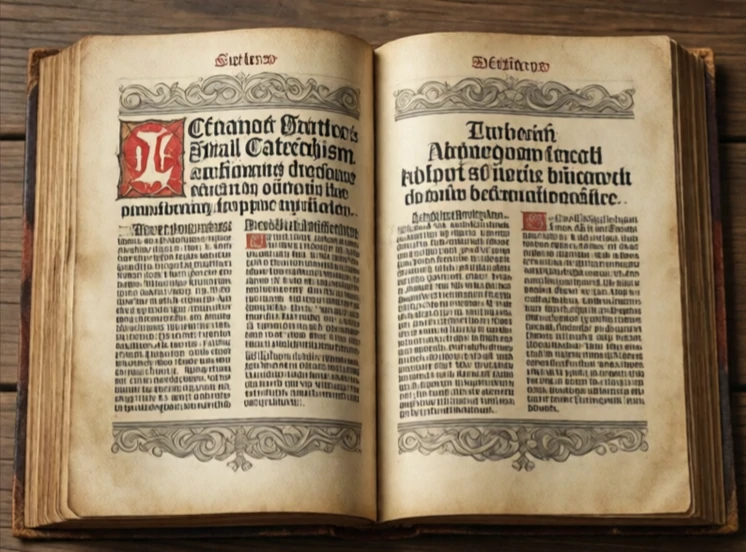
A catechism is a summary of Christian doctrine in question-and-answer form. It is used to teach the faith. The word comes from the Greek katecheo, meaning to instruct orally. A catechism presents the essentials. It covers the creed, the sacraments, the commandments, and prayer. It is a tool for instruction. It is a tool for learning.
The most famous catechism is the Catechism of the Catholic Church. It was published in 1992. It is a comprehensive summary. It has four parts: the profession of faith, the celebration of the Christian mystery, life in Christ, and Christian prayer. It is a reference for bishops, priests, and laypeople. It is not a textbook. It is a source. It is a guide.
Types of catechisms
- Catholic: Catechism of the Catholic Church.
- Protestant: Heidelberg Catechism, Westminster Catechism.
- Lutheran: Luther's Small Catechism.
- Anglican: Book of Common Prayer catechism.
- Orthodox: various catechisms.
Catechisms are important. They preserve the faith. They transmit it. They clarify it. They defend it. They are a summary of what the church believes. They are a teaching tool. They are a resource for parents. They are a resource for converts. They are a resource for anyone who wants to understand the faith. A good catechism is clear. It is concise. It is faithful. It does not innovate. It does not speculate. It teaches. It instructs. It forms. The catechism is the church's curriculum. It is the alphabet of the faith. Without it, the faith would be vague. With it, the faith is clear. It can be learned. It can be lived. It can be passed on. The catechism is the gift of one generation to the next.
Comments
No comments yet. Be the first to share a thought.
Leave a comment