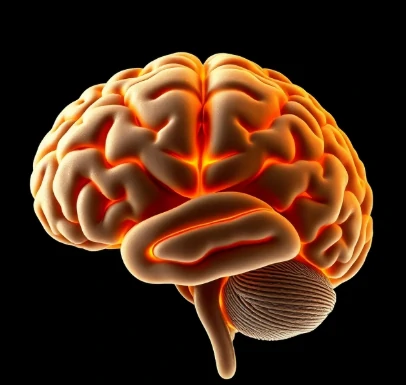
The occipital lobe is the posterior region of each cerebral hemisphere and the primary center for visual processing. Nearly all visual information that reaches conscious awareness passes through it.
The primary visual cortex, located along the calcarine sulcus, receives organized input from the eyes via the thalamus. Different portions of the visual field are mapped onto different portions of the cortex. Surrounding association areas further analyze color, motion, form, and spatial relationships, and they send the results forward to temporal and parietal regions for object recognition and spatial awareness.
Damage to the occipital lobe can produce blindness in corresponding parts of the visual field, even when the eyes and optic nerves are intact. More selective lesions may impair color perception, motion detection, or the ability to recognize objects while basic sight remains. The occipital lobes work in continuous dialogue with other brain regions that supply attention, memory, and expectation.
When you see the world in front of you, the occipital lobe is constructing that visual experience.
Comments
No comments yet. Be the first to share a thought.
Leave a comment