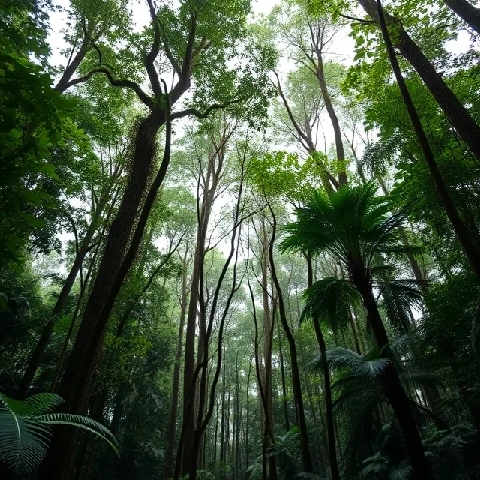
Rain falls almost every day and the vegetation grows in dense, towering layers. A rainforest is a forest characterized by high annual rainfall and extraordinary biological diversity. Tropical rainforests occur near the equator; temperate rainforests appear in cooler, wet coastal regions.
The canopy intercepts most sunlight, leaving the forest floor relatively dark. Nutrient cycling is rapid; soils themselves are often poor because heavy rain leaches minerals. A huge proportion of the world’s terrestrial species live in rainforests, many still undescribed.
Deforestation for agriculture, logging, and mining continues to reduce rainforest area. The loss affects global carbon balance, regional climate, and indigenous cultures. Conservation efforts range from protected areas to sustainable-use reserves. The sheer complexity of a primary rainforest remains one of the planet’s great biological treasures.
- Dense forest with high rainfall
- Extremely high biodiversity
- Layered canopy structure
- Threatened by deforestation
Comments
No comments yet. Be the first to share a thought.
Leave a comment