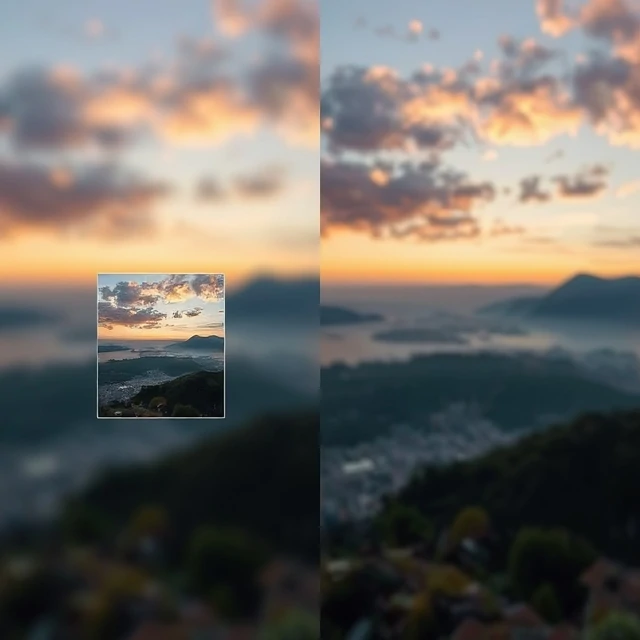
Zoom into a photograph on screen and you eventually see squares. Those squares are pixels, and images built from them are raster graphics. Each pixel holds a color value. Together they form the picture. The format is ideal for photographs and detailed artwork, where subtle gradients and continuous tones matter. JPEG, PNG, GIF, and TIFF are all raster formats.
The catch is resolution. A raster image has a fixed number of pixels. Enlarge it too much and the pixels stretch, producing blur or jagged edges. This is why a logo designed as a small raster file looks terrible on a billboard. Designers keep raster images at the resolution they will be used at, or higher. For elements that need to scale infinitely, like logos and icons, vector graphics are the better choice.
Key traits
- Built from a fixed grid of pixels.
- Excellent for photographs and detailed art.
- Loses quality when scaled up.
- File size grows with resolution.
Raster and vector are not rivals. Most design projects use both. A poster might combine a raster photograph with vector type and shapes.
Comments
No comments yet. Be the first to share a thought.
Leave a comment