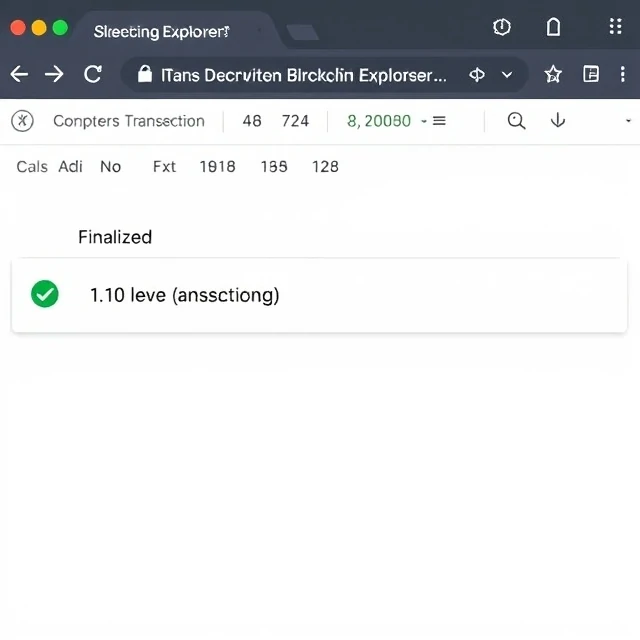
Finality is the point where a transaction cannot be reversed. On Bitcoin, finality is probabilistic. Each additional block makes reversal less likely. After six blocks, the probability of a reorganization is vanishingly small, but it is never zero. On proof-of-stake chains, finality can be absolute. Ethereum's consensus mechanism finalizes blocks after two epochs, about 12 minutes. Once a block is finalized, validators would have to burn at least one-third of the total staked ETH to revert it. That cost makes finality economically enforceable.
The difference matters for settlement. A probabilistic system means you wait longer for higher confidence. An absolute system gives you a clear point where the transaction is done. Exchanges set their own finality thresholds based on the value at risk. A small deposit might need one confirmation. A large withdrawal might need thirty. Finality is not just a technical detail. It determines how fast you can move on with your business and how much risk you carry while waiting.
Finality by network
- Bitcoin — probabilistic, 6 confirmations for practical finality
- Ethereum — absolute finality after 2 epochs, roughly 12 minutes
- Solana — optimistic confirmation in seconds, finality shortly after
- Cosmos chains — instant finality with Tendermint consensus
Faster finality enables faster settlement. Slower finality is often the price of broader decentralization.
Comments
No comments yet. Be the first to share a thought.
Leave a comment