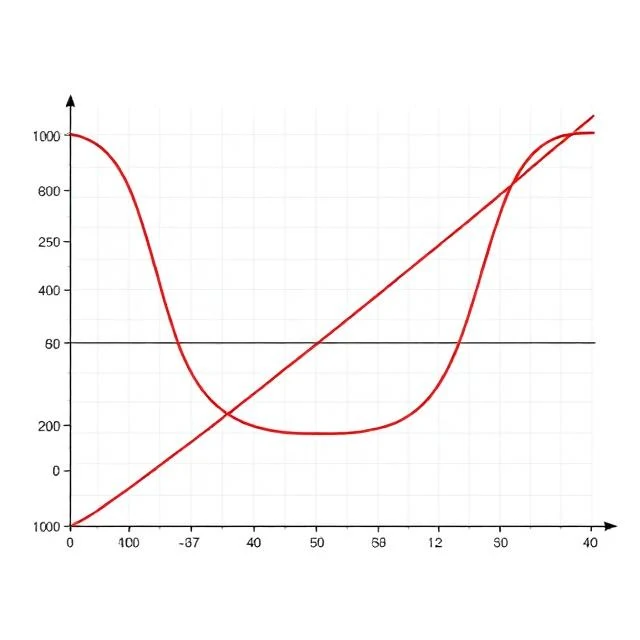
A model that memorizes training data fails on new examples. A model that ignores nuance misses patterns entirely. The tension between these failure modes is the bias-variance tradeoff, and it shapes nearly every decision in machine learning.
Bias measures error from overly simple assumptions. High bias means underfitting. Variance measures sensitivity to small fluctuations in training data. High variance means overfitting. Total error combines both, plus irreducible noise.
Typical signals
- High training error, high test error, underfitting
- Low training error, high test error, overfitting
- Both low, well-fitted model
- Both high, wrong model family
Modern practice complicates the classic curve. Large neural networks can achieve low bias and low variance simultaneously, which older theory did not predict. Regularization, more data, and ensembling remain standard tools for managing the tradeoff.
Comments
No comments yet. Be the first to share a thought.
Leave a comment