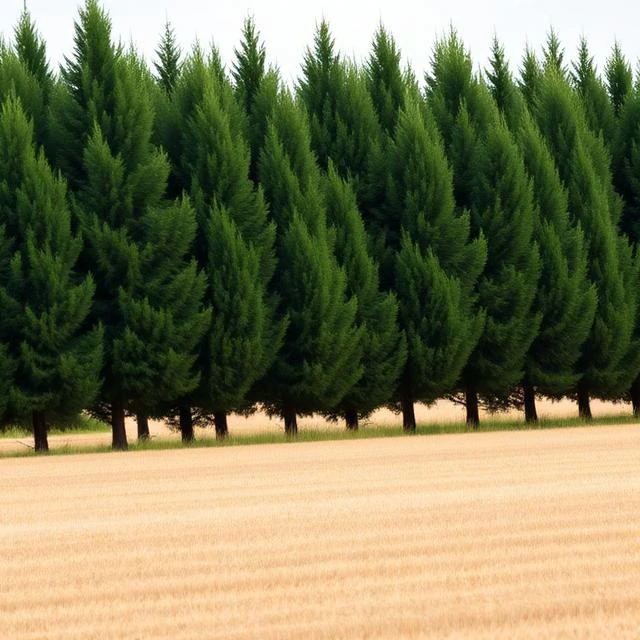
Wind steals soil, dries crops, and stresses livestock. A windbreak blocks it. Rows of trees or shrubs planted across the prevailing wind direction slow the airflow, reducing erosion and protecting fields, homes, and animals.
Design matters. A windbreak reduces wind speed for a distance roughly ten to twenty times its height downwind. Porosity also matters. A dense wall creates turbulence, while a semi-permeable barrier filters wind more gently over a longer distance.
Common windbreak species
- Evergreens for year-round protection
- Deciduous trees for summer shade and winter light
- Shrubs for low-level density
- Native species for local conditions
Windbreaks take years to mature. Farmers plant them as long-term investments, knowing the benefits accumulate slowly. They also provide habitat for birds and pollinators, adding ecological value beyond wind protection.
Comments
No comments yet. Be the first to share a thought.
Leave a comment