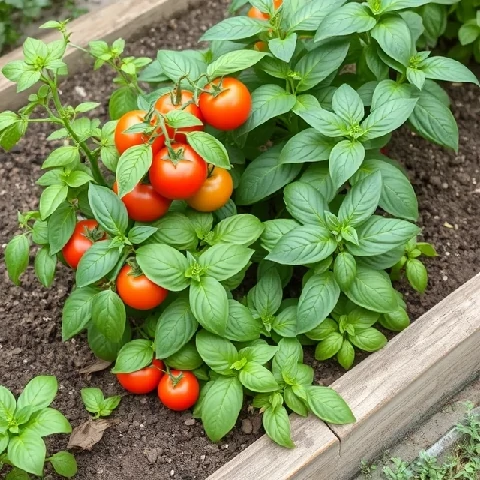
Certain plants grow better when they share space with the right neighbors. Companion planting pairs crops that deter pests, improve soil, or enhance flavor for one another. Classic combinations include tomatoes with basil, carrots with onions, and corn with beans and squash—the traditional Three Sisters planting.
Some pairings work through scent. Strong-smelling herbs mask the odor of vegetables that attract insects. Others attract beneficial insects that prey on pests. Legumes fix nitrogen that neighboring plants can use. The approach reduces the need for chemical sprays and makes more efficient use of garden space.
Not every combination succeeds. Some plants compete for the same nutrients or harbor shared diseases. Observation and local experience refine the list of useful partners. Start with proven pairs and note results over successive seasons.
- Pairs plants for mutual benefit
- Can deter pests or improve soil
- Examples include tomato and basil
- Requires attention to compatibility
Comments
No comments yet. Be the first to share a thought.
Leave a comment