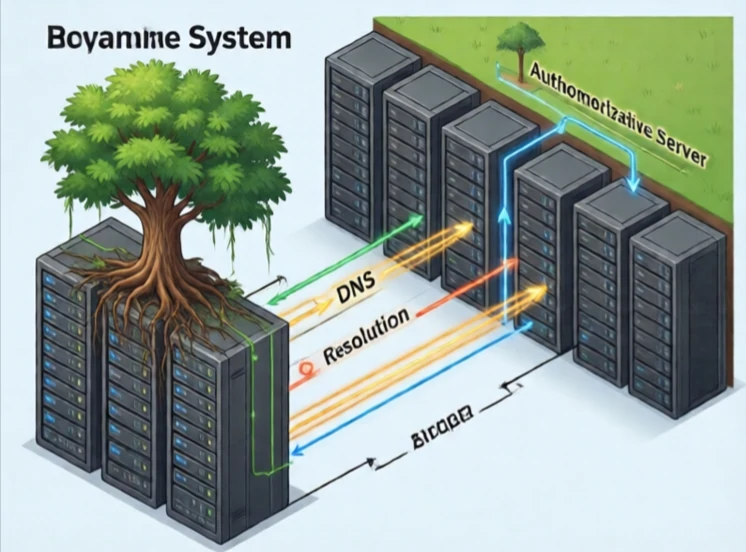
You type a name into your browser. The Domain Name System translates it into an IP address. DNS is the phone book of the internet. It maps human-readable names to machine-readable numbers. Without it, you would have to remember 142.250.72.14 instead of google.com.
DNS is a distributed database. No single server holds all the records. Root servers point to top-level domains. TLD servers point to authoritative servers. Authoritative servers hold the actual records. Your resolver queries them in sequence and caches the answer. The whole process takes milliseconds.
Common DNS records
- A: maps a name to an IPv4 address
- AAAA: maps a name to an IPv6 address
- CNAME: aliases one name to another
- MX: directs email to a mail server
- TXT: holds arbitrary text, often for verification
DNS is critical and fragile. Attacks on DNS can take down websites. DNS spoofing can redirect users to malicious sites. DNSSEC adds cryptographic signatures to prevent tampering. But adoption is uneven. The phone book of the internet needs better locks.
Comments
No comments yet. Be the first to share a thought.
Leave a comment