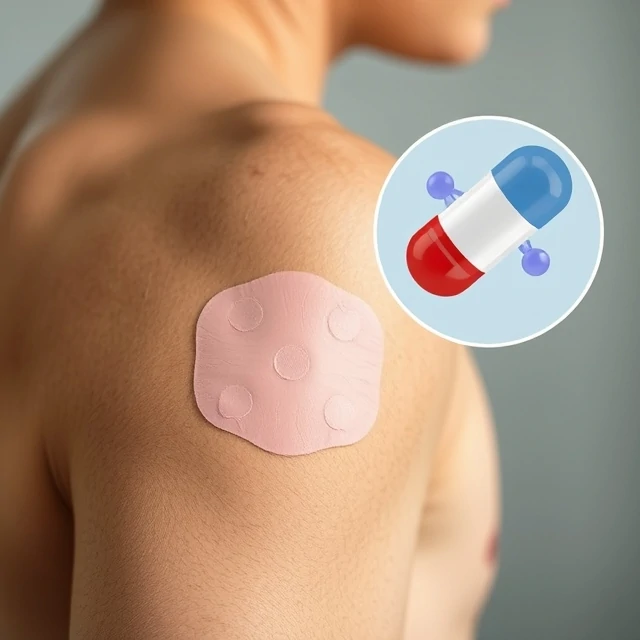
A patch is a dosage form that delivers drug through the skin. It sticks to the surface, releases medication at a controlled rate, and the drug diffuses through the skin layers into the bloodstream. The approach avoids the digestive system, provides steady blood levels, and requires no daily pill. Patches are used for nicotine replacement, contraception, pain relief, and hormone therapy, among other things.
The design varies. A matrix patch embeds the drug in an adhesive layer that sticks directly to the skin. A reservoir patch holds the drug in a separate compartment and controls release through a membrane. The rate of delivery depends on the drug's lipid solubility, the patch's surface area, and the condition of the skin. Heat, sweating, and damaged skin can change absorption. Patches should be applied to clean, dry, hairless skin, and rotated to different sites to avoid irritation.
Practical points:
- Steady release. Patches provide continuous drug delivery for hours to days.
- Site rotation. Move the patch to a new spot with each change.
- Heat caution. Heat increases absorption and can cause overdose.
- Disposal. Used patches contain residual drug and should be folded and discarded safely.
Nicotine patches are a common example. They deliver a steady dose to reduce cravings and withdrawal during smoking cessation.
Comments
No comments yet. Be the first to share a thought.
Leave a comment