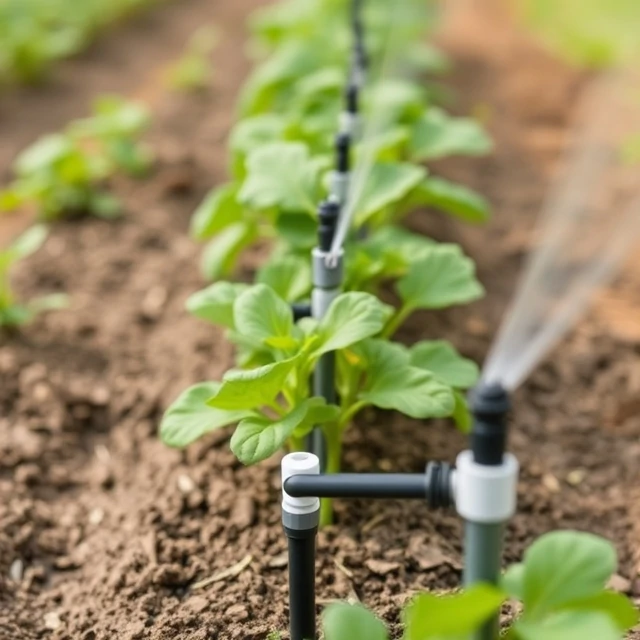
Rain does not always arrive when plants need water. Irrigation is the artificial supply of water to support growth. Methods range from simple hand watering with a can or hose to sophisticated drip systems and overhead sprinklers controlled by timers and sensors.
Efficient irrigation delivers water to the root zone with minimal waste. Drip emitters and soaker hoses excel at this. Overhead systems wet foliage and can encourage disease if used late in the day. Soil type, plant needs, and climate dictate frequency and volume. Deep, infrequent watering encourages stronger root systems than frequent light sprinkling.
Monitoring soil moisture—by feel, probe, or sensor—prevents both drought stress and waterlogging. Well-designed irrigation reduces labor and conserves water while keeping plants productive through dry spells.
- Artificial supply of water to plants
- Includes drip, sprinkler, and hand methods
- Aims for efficiency and root-zone delivery
- Adjusted according to soil and weather
Comments
No comments yet. Be the first to share a thought.
Leave a comment