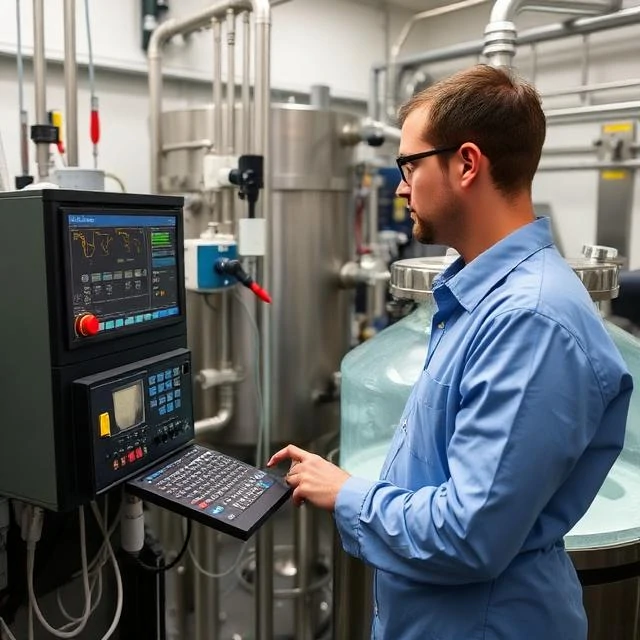
Biomanufacturing begins with upstream processing. It is the stage where cells are cultured and the product is formed. The cells might be bacteria, yeast, insect cells, or mammalian cells. They are grown in bioreactors under controlled conditions. The goal is to maximize cell density and product yield. Everything downstream depends on what happens here.
Upstream processing has several steps. Cell line development creates a stable, high-producing cell line. Seed culture expands the cells from a small vial to a volume large enough for the production bioreactor. Media optimization provides the nutrients the cells need. Process parameters, like temperature, pH, dissolved oxygen, and feeding strategy, are controlled to maximize productivity. The production bioreactor can range from a few liters to thousands of liters.
The choice of expression system matters. Bacteria are fast and cheap but cannot perform complex post-translational modifications. Yeast can modify proteins but not in the same way as human cells. Mammalian cells produce correctly folded and modified proteins but are slow and expensive. Insect cells are used for some vaccines and proteins. The choice depends on the product.
Upstream processing is where the biology meets the engineering. Small changes in conditions can have large effects on yield and quality. It is a complex, dynamic process that requires careful monitoring and control.
Comments
No comments yet. Be the first to share a thought.
Leave a comment