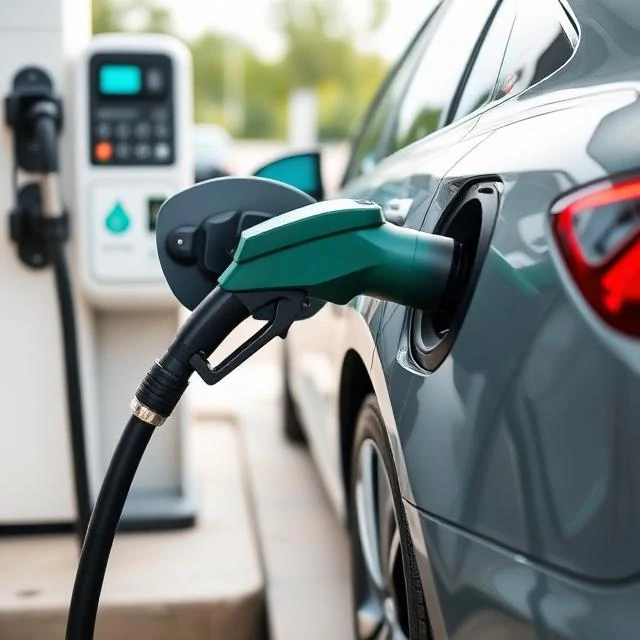
A fuel cell vehicle runs on electricity, but it does not plug in. It carries hydrogen in a tank and combines it with oxygen from the air in a fuel cell stack. The chemical reaction produces electricity to drive the motor, and the only emission is water vapor. It is an electric car with a different energy source.
The fuel cell stack is the heart of the vehicle. It contains hundreds of individual cells, each with an anode and a cathode separated by a membrane. Hydrogen enters the anode, where a catalyst splits it into protons and electrons. The protons pass through the membrane, and the electrons travel through an external circuit, creating electric current. At the cathode, oxygen, protons, and electrons combine to form water.
Fuel cell vehicles refuel in three to five minutes, similar to gasoline. Range is comparable to conventional cars, around 300 to 400 miles. The Toyota Mirai and Honda Clarity are the most common models. But hydrogen stations are rare. California has about 50, and most other states have none. Producing hydrogen cleanly is also a challenge. Most hydrogen today is made from natural gas, which releases carbon dioxide.
Fuel cells make sense for heavy trucks, buses, and ships, where batteries would be too heavy and charging too slow. For passenger cars, battery electric vehicles have the edge, but fuel cells remain an option.
Comments (2)
Leave a comment