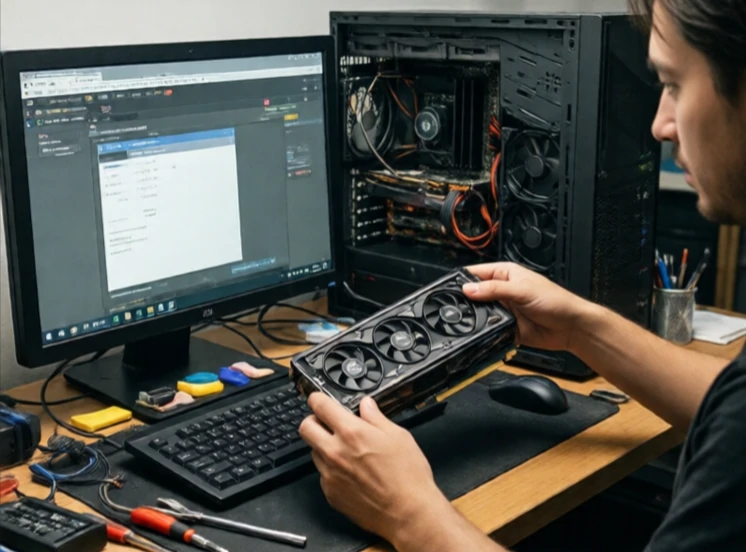
A desktop computer sits on or under a desk. It is a personal computer designed for regular use at a fixed location. Unlike a laptop, it is not portable. But it offers advantages: larger screens, more ports, easier upgrades, and better cooling. For gaming, video editing, and office work, desktops still hold their own.
The first IBM PC launched in 1981. It set the standard for the desktop form factor. Today, desktops come in many shapes: full towers, small form factors, and all-in-ones with the computer built into the monitor. Apple's iMac and Mac Mini are popular examples.
Components
- Case: holds and protects components
- Motherboard: connects everything
- Processor: executes instructions
- Memory: temporary storage for running programs
- Storage: hard drive or SSD for permanent data
- Power supply: converts AC to DC
Desktops are easier to repair and upgrade than laptops. You can swap a graphics card or add more RAM without replacing the whole machine. That repairability extends their life and reduces electronic waste.
Comments
No comments yet. Be the first to share a thought.
Leave a comment