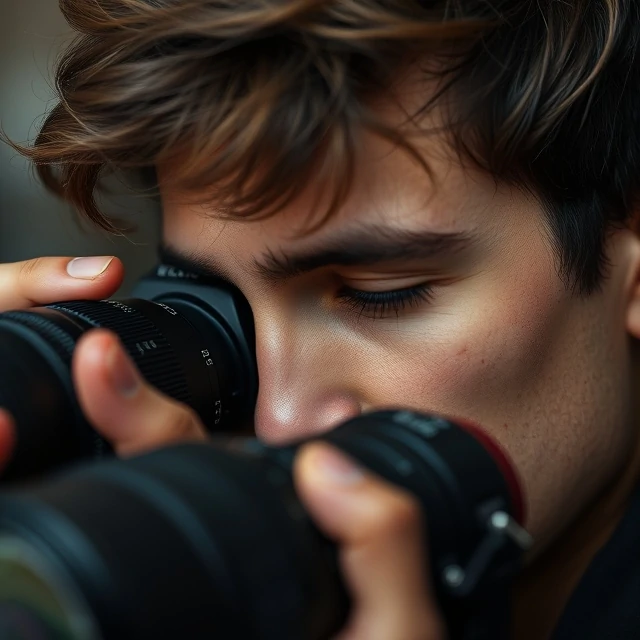
A viewfinder is the window through which a photographer composes a shot. It shows what the camera sees, or close to it. There are two main types: optical and electronic. An optical viewfinder uses a mirror and prism to direct light from the lens to the eye. It shows the scene in real time, with no lag. An electronic viewfinder uses a small screen to display what the sensor sees. It shows the exposure, white balance, and other settings as they will appear in the final image. Each has advantages. Optical viewfinders are bright and clear, with no lag. Electronic viewfinders are more informative and can show a preview of the final image.
Some cameras have no viewfinder at all. They rely on the rear LCD screen for composition. That works for many situations, but it is awkward in bright sunlight and less stable for handheld shooting. A viewfinder provides a third point of contact, with the camera pressed against the face, which reduces camera shake. It also helps in bright light, where the LCD screen is hard to see. The viewfinder is not just a window. It is a tool for composition and stability. The best viewfinder is the one that works for you.
Viewfinder types
- Optical. Real-time view, no lag.
- Electronic. Shows exposure and settings preview.
- Rangefinder. Separate window, shows framelines.
- LCD screen. No viewfinder, compose on the rear screen.
- Hybrid. Combines optical and electronic.
A viewfinder is not the same as a lens. The lens captures the image. The viewfinder shows you what you are capturing.
Comments
No comments yet. Be the first to share a thought.
Leave a comment