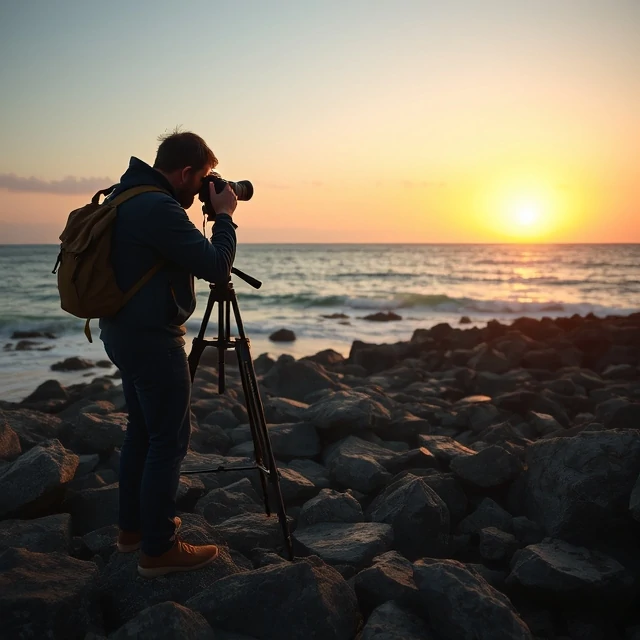
A tripod is a three-legged stand that stabilizes a camera. It is one of the most important accessories in photography. It allows slow shutter speeds without camera shake, precise composition, and repeatable framing. Tripods are used for landscape, architecture, macro, night, and studio photography. They are also used for video, where stability is essential. A good tripod is heavy and rigid. A bad tripod is worse than no tripod at all, because it wobbles and transmits vibrations.
Tripods come in many materials. Aluminum is affordable and durable. Carbon fiber is lighter and absorbs vibrations better, but it costs more. The legs can be tubular or sectional. The head can be a ball head, a pan-and-tilt head, or a gimbal head. The choice depends on the camera and the subject. A ball head is quick and flexible. A pan-and-tilt head is better for video. A gimbal head is used for heavy telephoto lenses. A tripod should be tall enough to reach eye level without extending the center column. The center column is convenient but reduces stability. A tripod is not just a stand. It is a tool for precision. It slows you down and makes you think about composition.
Tripod types
- Aluminum. Affordable and durable.
- Carbon fiber. Lighter and absorbs vibrations.
- Travel. Compact and lightweight.
- Studio. Heavy and stable.
- Tabletop. Small and portable.
A tripod is not always necessary. But when it is, nothing else will do. It is the difference between a sharp image and a blurry one.
Comments
No comments yet. Be the first to share a thought.
Leave a comment