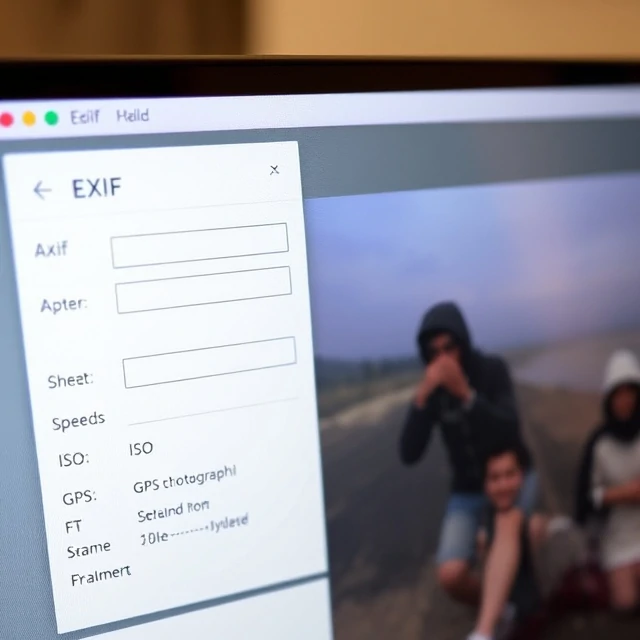
Every digital photograph carries hidden data. EXIF, short for Exchangeable Image File Format, records the camera settings, the date and time, the lens used, the focal length, the aperture, the shutter speed, the ISO, and often the GPS coordinates. It is embedded in the image file and travels with it. Open a photo in most editing software and the EXIF data is there, a record of how the image was made.
EXIF is useful for learning. A photographer can review a shoot and see which settings worked and which did not. It is useful for organizing. Software can sort images by date, location, or camera. It is useful for forensics and journalism, where verifying when and where an image was taken matters. But EXIF also raises privacy concerns. GPS coordinates can reveal where a photo was taken, which can be a problem for sensitive locations or personal safety. Social media platforms often strip EXIF data when images are uploaded, though not always. Photographers can remove it manually before sharing.
What EXIF records
- Camera settings. Aperture, shutter speed, ISO.
- Lens. Focal length and lens model.
- Date and time. When the image was captured.
- GPS. Where the image was taken, if enabled.
- Camera. Make, model, and serial number.
EXIF is not visible in the image itself. It is metadata, data about the data. It is easy to ignore and easy to exploit.
Comments
No comments yet. Be the first to share a thought.
Leave a comment