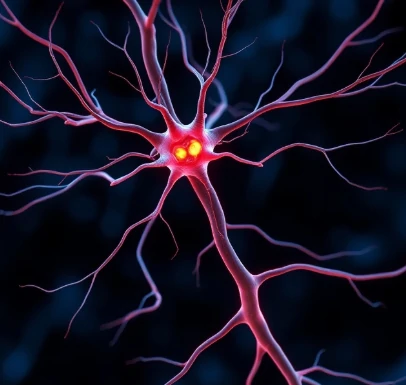
Information about the external world and the body’s internal state enters the nervous system through sensory neurons. These cells transduce physical or chemical stimuli into electrical signals and transmit them toward the central nervous system.
Their cell bodies often lie in peripheral ganglia; a single long process extends outward to the sensory ending and inward to the spinal cord or brainstem. Different classes of sensory neurons are tuned to light touch, pain, temperature, muscle stretch, joint position, or visceral signals. In the special senses, receptor cells synapse onto sensory neurons that carry the information centrally.
The specificity of sensory neurons determines the quality of the sensation that will ultimately be perceived. Damage produces numbness, pain, or loss of particular sensory modalities. Because their axons travel in peripheral nerves, sensory neurons are vulnerable to the same injuries and diseases that affect motor axons, yet their central connections and peripheral endings give them distinct regenerative and signaling properties.
Every percept begins with the activation of a set of sensory neurons.
Comments
No comments yet. Be the first to share a thought.
Leave a comment