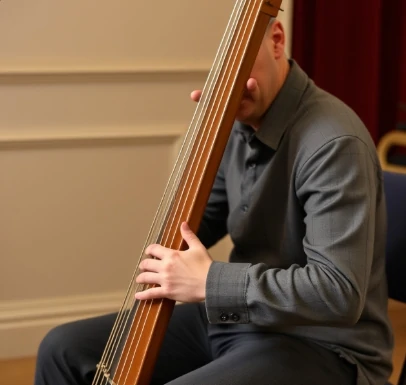
The bassoon is the largest common woodwind and the lowest voice of the double-reed family. Its long wooden tube folds back on itself so the instrument can be held comfortably while seated. A slender metal crook holds the double reed that the player blows into.
The sound is reedy, dark, and surprisingly agile across a wide range. Composers use the bassoon for solemn bass lines, lyrical solos, and comic effects alike. In the orchestra it often doubles the cellos or provides independent counterpoint. Solo repertoire, though smaller than for clarinet or flute, includes concertos by Vivaldi, Mozart, and later writers.
Learning the bassoon requires strong breath support and precise embouchure control. Reed making is an essential skill for serious players because commercial reeds rarely satisfy individual needs. The instrument’s size and complexity make it less common in schools, yet its unique color is indispensable in professional ensembles.
- Large double-reed woodwind
- Folded wooden body with metal crook
- Dark, reedy, flexible tone
- Essential in orchestras and wind ensembles
Comments
No comments yet. Be the first to share a thought.
Leave a comment