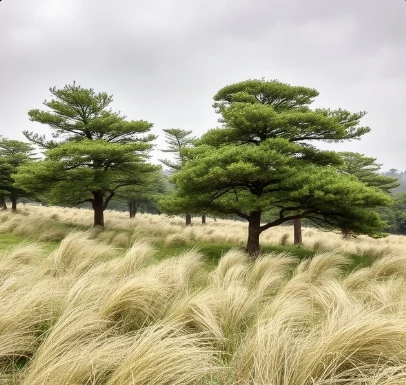
Wind is the horizontal movement of air from regions of higher pressure toward regions of lower pressure. The greater the pressure difference and the closer the centers, the stronger the wind.
Local winds are shaped by terrain, heating contrasts, and friction. Large-scale winds are organized into the familiar global belts and into the circulating patterns around highs and lows. Wind direction is always reported as the direction from which the air is blowing.
Wind transports heat, moisture, and pollutants around the planet. It powers sailing ships and wind turbines, shapes landscapes through erosion, and influences the severity of storms. Measuring wind speed and direction is a basic task at every weather station.
Gusts are short-lived peaks above the sustained wind; both are important for safety and design standards.
Comments
No comments yet. Be the first to share a thought.
Leave a comment