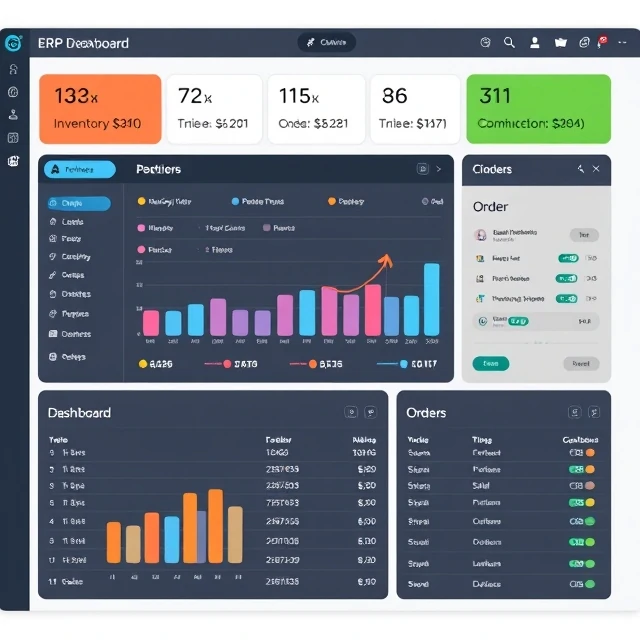
Separate systems for finance, inventory, and orders create conflicting versions of the truth. Enterprise resource planning software integrates core business processes—purchasing, inventory, production, sales, and accounting—into a shared data environment.
A single transaction updates all relevant modules, so stock levels, financial postings, and customer orders stay synchronized. Logistics functions rely on ERP for order capture, inventory visibility, and basic warehouse transactions. Larger operations often extend ERP with specialized transportation or warehouse systems.
Implementation is complex and demands process standardization. Once running, ERP becomes the backbone against which other logistics technologies connect. Real-time data from ERP feeds planning, execution, and performance measurement across the supply chain.
- Integrated software for core business processes
- Shares data across purchasing, inventory, sales, and finance
- Foundation for logistics execution systems
- Requires significant process alignment to implement
Comments (2)
Leave a comment