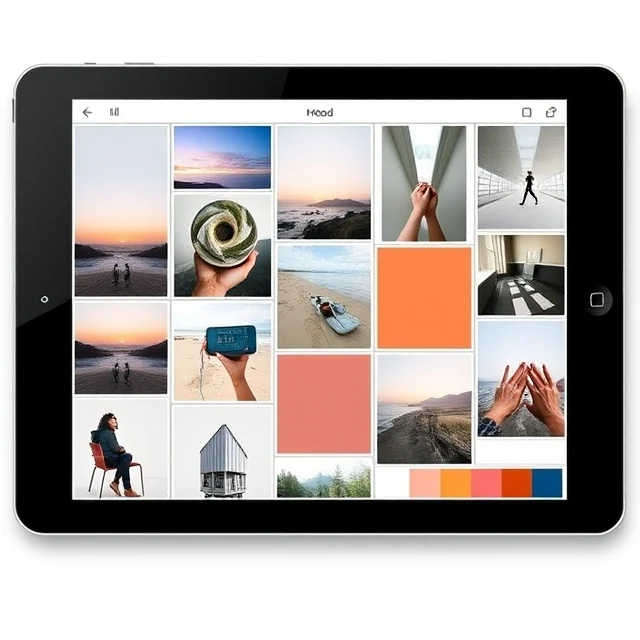
Before choosing a typeface or a color, many designers gather images first. A mood board collects photographs, textures, typography samples, color swatches, and fabric scraps that convey a direction. It is not a finished design. It is a conversation starter, a way to align a team or client around a feeling before anyone commits to specifics.
Mood boards can be physical or digital. Physical boards often use foam core, pins, and printed images spread across a studio wall. Digital boards live in Pinterest, Milanote, or a simple slide deck. The best ones are specific. Instead of a generic photo of a beach, a board might include weathered wood, salt-crusted rope, and a particular shade of faded blue. That level of detail gives collaborators something to react to.
What goes on a board
- Photography that captures tone and lighting.
- Color swatches and material samples.
- Typeface examples at different weights.
- Textures, patterns, and reference objects.
A mood board is disposable by design. Once the direction is set, it has done its job. Keeping it around too long can box in the work that follows.
Comments
No comments yet. Be the first to share a thought.
Leave a comment