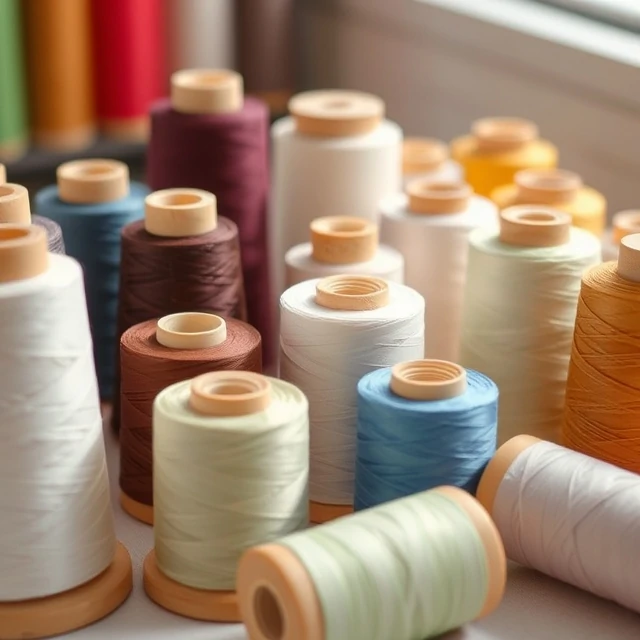
Thread is a thin strand of spun fiber used in sewing, embroidery, and weaving. Cotton, polyester, silk, and nylon are the common ones. Cotton thread is soft and works well on natural fabrics. Polyester thread is strong and has some stretch, which suits knits and outdoor gear. Silk thread is fine and strong, often used in tailoring and basting because it leaves fewer marks. Nylon thread is tough and invisible, used for beading and heavy-duty repairs.
Thread weight and ply matter. A 50-weight thread is standard for piecing and general sewing. A 40-weight is slightly heavier and good for topstitching. A 12-weight is thick and decorative. The number of plies affects strength and smoothness. Two-ply is lighter. Three-ply is stronger. Mercerized cotton is treated to reduce lint and add shine. Glazed thread is treated with a coating that reduces friction, which helps when hand-sewing through thick fabric.
Thread types at a glance
- All-purpose polyester — strong, slight stretch, most sewing
- Mercerized cotton — natural, low lint, quilting and heirloom sewing
- Silk — fine, strong, tailoring and basting
- Nylon — invisible, beading and heavy repairs
- Embroidery floss — divisible strands, hand embroidery
Match thread to fabric weight and fiber. The wrong thread can pucker lightweight fabric or break under the strain of heavy seams.
Comments (3)
Leave a comment