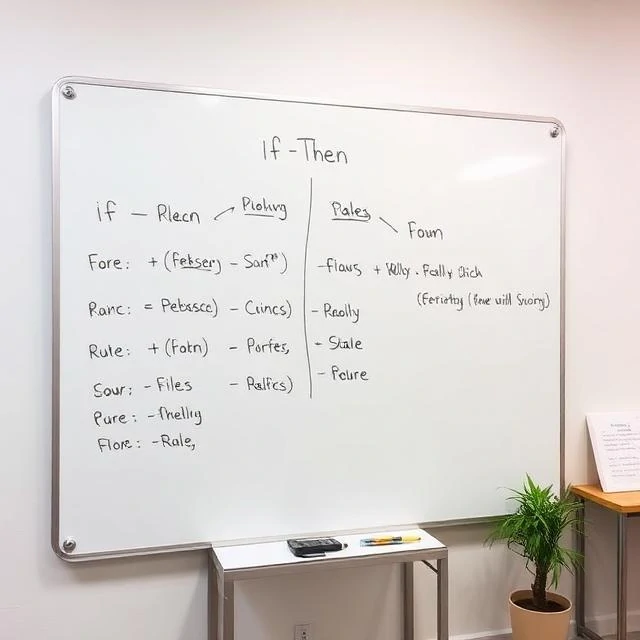
Before machine learning, knowledge was coded by hand. Expert systems captured the rules of a domain in if-then statements and used an inference engine to draw conclusions. They powered medical diagnosis, mineral exploration, and equipment troubleshooting in the 1970s and 1980s.
Two components did the work. The knowledge base stored facts and rules, often built through interviews with human experts. The inference engine applied those rules to new cases, chaining logic forward or backward to reach conclusions.
Classic examples
- MYCIN for bacterial infections
- DENDRAL for molecular structure
- XCON for computer configuration
- CADUCEUS for internal medicine
Maintenance was the downfall. Rules multiplied, conflicts emerged, and updating the knowledge base required expert effort. Machine learning replaced many applications because it learns from data instead of requiring explicit encoding. Expert systems still appear in narrow domains where transparency and auditability matter.
Comments
No comments yet. Be the first to share a thought.
Leave a comment