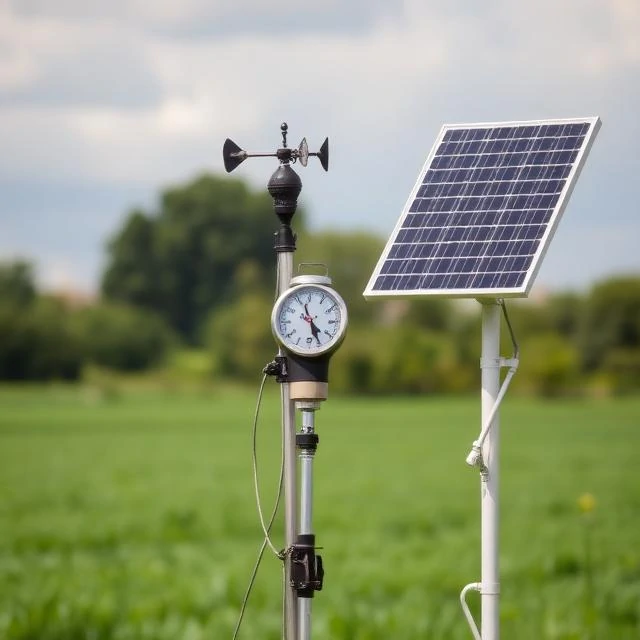
Decisions depend on data. A weather station records temperature, humidity, rainfall, wind speed, and sometimes soil moisture and solar radiation. Farmers use the readings to time irrigation, spraying, and harvest.
Modern stations log data automatically and transmit it to a phone or computer. Some connect to networks that feed regional forecasts and pest models. The best stations are sited away from buildings and trees that distort readings.
Typical sensors
- Temperature and humidity probe
- Rain gauge
- Anemometer and wind vane
- Solar radiation sensor
- Soil moisture probes
Spraying decisions depend on wind and humidity. Harvest timing depends on rainfall and temperature. Irrigation scheduling depends on evaporation rates. A well-maintained station turns weather from a guess into a management tool.
Comments (3)
Leave a comment