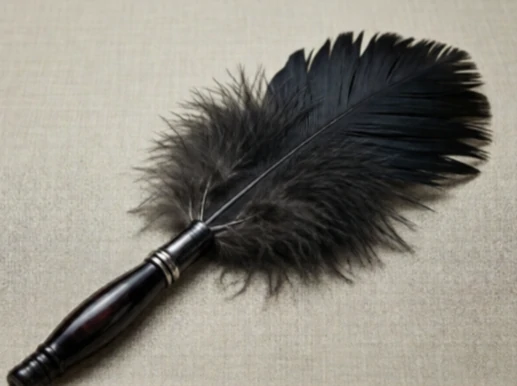
A feather tickler is a plume on a short handle. Drawn along the inner arm, the side of a breast, or the crease of a thigh, it wakes up skin that a heavier flogger would flatten. The sensation sits on the edge between itch and tease.
Ostrich and marabou are common. Synthetic plumes wash more easily and shed less. A tickler that looks lush in the shop can go sparse after a year of being stuffed in a drawer. Hang it or lay it in a box so the vane stays open.
This is warmup gear. Pair it with a blindfold and the nervous system does half the work. Keep feathers away from eyes and from lube puddles, which mat the barbs into a sad paintbrush. If you play with wax or oil, use a dedicated tickler you do not mind ruining.
Care
- Spot-clean synthetics with mild soap; air-dry hanging.
- Do not share feather ticklers without a cover if skin is broken.
- Watch for quill ends that have split into sharp points.
- A longer handle gives better control than a loose bunch of feathers.
Comments
No comments yet. Be the first to share a thought.
Leave a comment