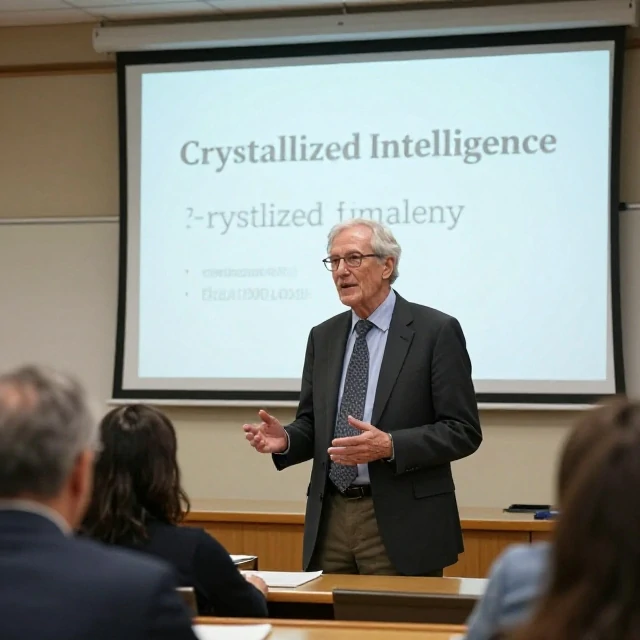
Crystallized intelligence is the accumulation of knowledge, facts, and skills acquired throughout life. It is what you know. It grows with experience and education. Vocabulary, general knowledge, and expertise are examples. It tends to increase with age. It does not decline much until late in life.
The term was introduced by Raymond Cattell. He distinguished crystallized intelligence from fluid intelligence. Fluid intelligence is the ability to reason and solve new problems. It peaks in early adulthood and declines with age. Crystallized intelligence is the store of knowledge. It keeps growing. The two are related. Fluid intelligence helps you learn. Crystallized intelligence is what you have learned.
Examples of crystallized intelligence
- Vocabulary and language skills.
- General knowledge and trivia.
- Professional expertise.
- Cultural knowledge.
- Historical facts.
Crystallized intelligence is useful in everyday life. It helps you understand a news article. It helps you navigate a familiar situation. It helps you give advice. Older adults often have high crystallized intelligence. They have accumulated decades of knowledge. They may be slower at solving new puzzles. But they are faster at solving familiar ones. That is the trade-off. Fluid intelligence declines. Crystallized intelligence grows. The balance shifts with age. Crystallized intelligence is not fixed. It can be maintained and increased. Reading, learning, and engaging with the world keep it sharp. It is the wisdom of experience. It is the value of a lifetime of learning. It is what makes older people valuable. They know things. That knowledge is intelligence.
Comments
No comments yet. Be the first to share a thought.
Leave a comment